Featured projects
Xi
A coding agent harness you can shape.
An open-source coding agent harness for the terminal and the browser. One server holds each session; the terminal, the browser and my phone are clients of the same live session, so a refactor started at my desk keeps streaming on the couch.
- Clojure scripting, not shell pipelines — instead of a bash tool the agent gets a persistent Clojure REPL. Scripts filter and aggregate in the runtime; only the result enters the conversation.
- Permission rules — what the agent may do on its own is a file of rules: allow, ask, deny or nudge, matched on the tool, path, command or repo.
- Extensions as data — tools, slash commands, keybindings and web-client pages are a plain ClojureScript map, swapped in live while the server runs.
- MCP on both sides — Xi serves its own tools to the model and pulls in tools from any MCP server you add.
- Everything is an event — prompts, output, dialogs and renders pass through one queue of pure handlers; the event maps are the wire protocol.
Tokenscript
A DSL and interpreter for design tokens.
Every design token carries a $value — a single string that might hold a color, a reference to another token, a piece of math, a template string, or a function call. Previous tooling picked these values apart with stacked regexes and ad-hoc string handling, which grew brittle the moment tokens started referencing and computing each other.
For the next generation of tokens at tokens.studio we needed something definite: a real language with a real grammar, so that a $value means exactly one thing and can be evaluated safely and predictably.
What Tokenscript is
Tokenscript is a small domain-specific language, and an interpreter for it, that turns design tokens into a computable medium. Instead of thousands of bespoke transform functions, it ships a focused subset of language features that stay fast, type-safe and sandboxed.
- References — tokens resolve other tokens (
{primary-color}), with the full dependency graph tracked and evaluated in order. - Unit-aware math — units travel through operations as metadata, so
round(1.5px)is2pxandsum(1in, 72pt)converts and collapses to2in. - Template strings — backtick syntax composes values from references and expressions, e.g.
`${spacing.base * 2}px`. - Custom types & schemas — define your own types, units and functions, then bundle them as schemas that ship logic alongside token data.
Try it
A mini playground running the real interpreter in your browser — it loads lazily as you scroll here. Themes are just different stacks of token sets; edit the JSON and watch everything recompute.
Responsibilities
- Designed and implemented the language from the ground up in TypeScript — lexer, parser and tree-walking interpreter.
- Built the token resolver that walks the reference graph and evaluates each
$valuein dependency order. - Shaped the math and unit system so units are preserved and converted correctly across every operation.
- Wrote a tolerant parser and structured error reporting so tooling can surface precise, recoverable feedback to authors.
- Shipped the public interpreter package, docs, an interactive REPL playground and example apps.
Design Tokens at Penpot
Concept & Implementation for integrated design tokens on penpot.
Design Tokens give teams a single source of truth for design decisions like colors, spacing and typography. My work brought the DTCG Spec to Penpot as an open-source design tool.
Responsibilities
For Penpot I delivered the integration for Design Tokens in the Penpot app.
- Collaborated with the Penpot team and the people from Tokens.studio to bring the design token standard to Penpot.
- Spec & documentation work to define the loosely defined format.
- Implementation in Clojure/Script across frontend and backend.
- Defined the design tokens data shape and delivered the UI implementation.
- Communicated efforts across both teams.
2022 - 2024
Responsibilities
I worked on the team behind the presentation-consuming side of the product: the experience of delivering and watching presentations.
- Built features across the presentation experience, including the animations feature that brought motion and transitions to slides.
- Helped build interactive multiplayer Slide decks that are synced between clients.
- Contributed to the analytics front-end — graphs, tables and data visualisations that surface how viewers engage with a deck.
- Helped maintain and extend the internal component and design system that the app is built from.
2017 - 2022
MindMeister is Meisterlabs' flagship collaborative mind-mapping app.
During my time there I played an integral role in the team modernizing their existing legacy application by rebuilding it in React.
Responsibilities
- Engineered the high-performance canvas editor in React, able to render very large mind maps by virtualizing nodes geometrically, so only what's on screen is drawn.
- Responsible for the performance of the canvas (> 10,000 nodes)
- Built a robust drag-and-drop system and drawing interactions directly on the canvas.
- Created a file explorer for navigating and organising mind maps.
- Improved the team's productivity by building dev tools to debug & test the new mind-mapping canvas.
- Coached engineers from junior to senior in the tech stack, and helped bootstrap the team's documentation and unit-testing culture.
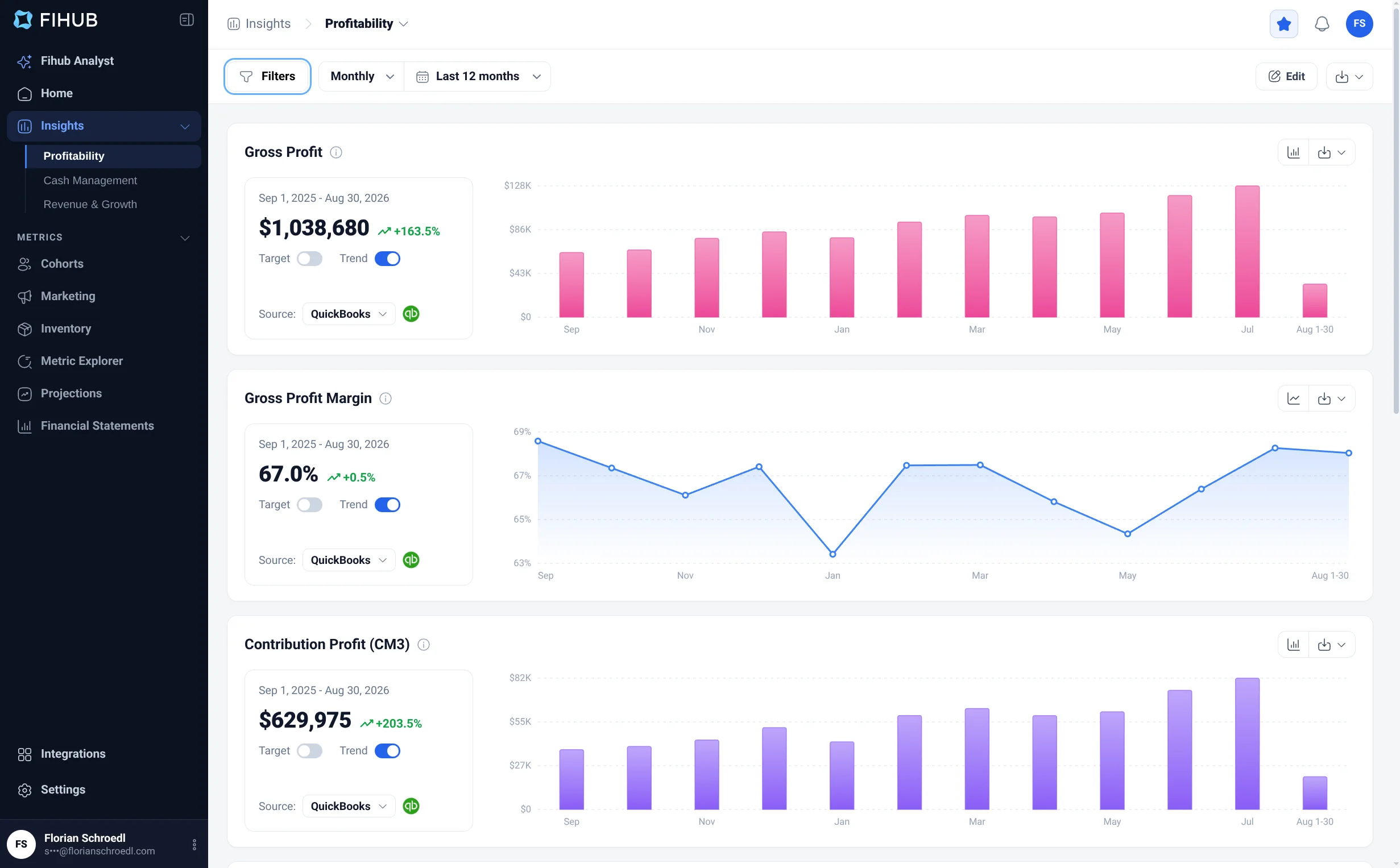
Fihub — Financial Analytics Platform
A product redesign of Fihub, a financial CRM with UX improvements for editing, filtering and sidebar restructuring.
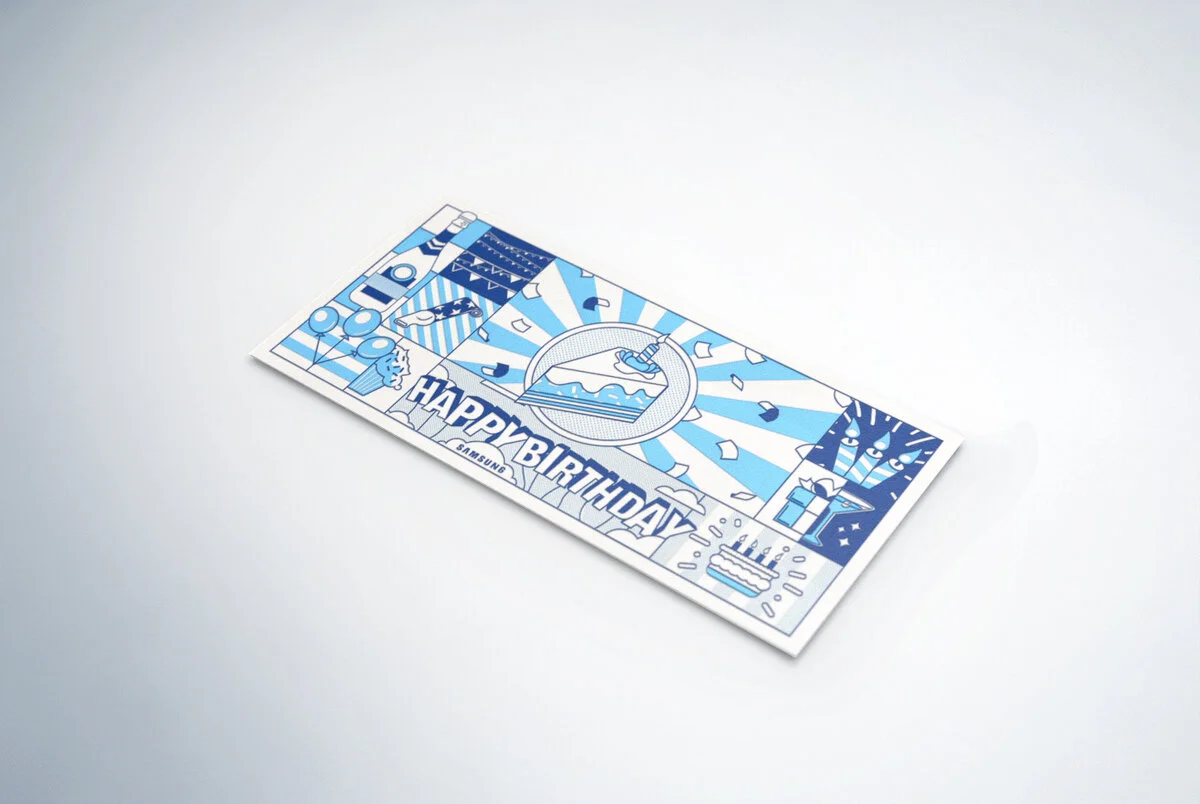
Samsung — Employee Greeting Cards
A series of illustrated greeting cards for Samsung Austria employees.
Work Experience
- 2024 - 2026HymaSenior Software EngineerOpen Source · Startup · Design Tokens
- 2022 - 2024PitchSenior Software EngineerStartup · App · Design Tool
- 2017 - 2022MeisterlabsSenior Frontend EngineerBootstrapped · App · Productivity
- 2014 - 2017Cake Kommunikations GmbHScreen Designer & Engineer
- 2012 - 2014Redact Media GmbHScreen Designer & Engineer
- 2011 - 2012FlammenScreen Designer & Advertorial Designer
- 2010 - 2011DraftFCBiScreen Designer & Advertorial Designer
- 2009 - 2010Project IntegrationshausCommunity Service
- 2008 - 2009DraftFCBiInternship Screen Designer
Knowledge
Languages
German & English (fluent)
Education
Autodidactic self-learner in all programming & design disciplines.
Interests
- Cooking
- Sports (Yoga, Badminton, Running)
- Reading
- Design